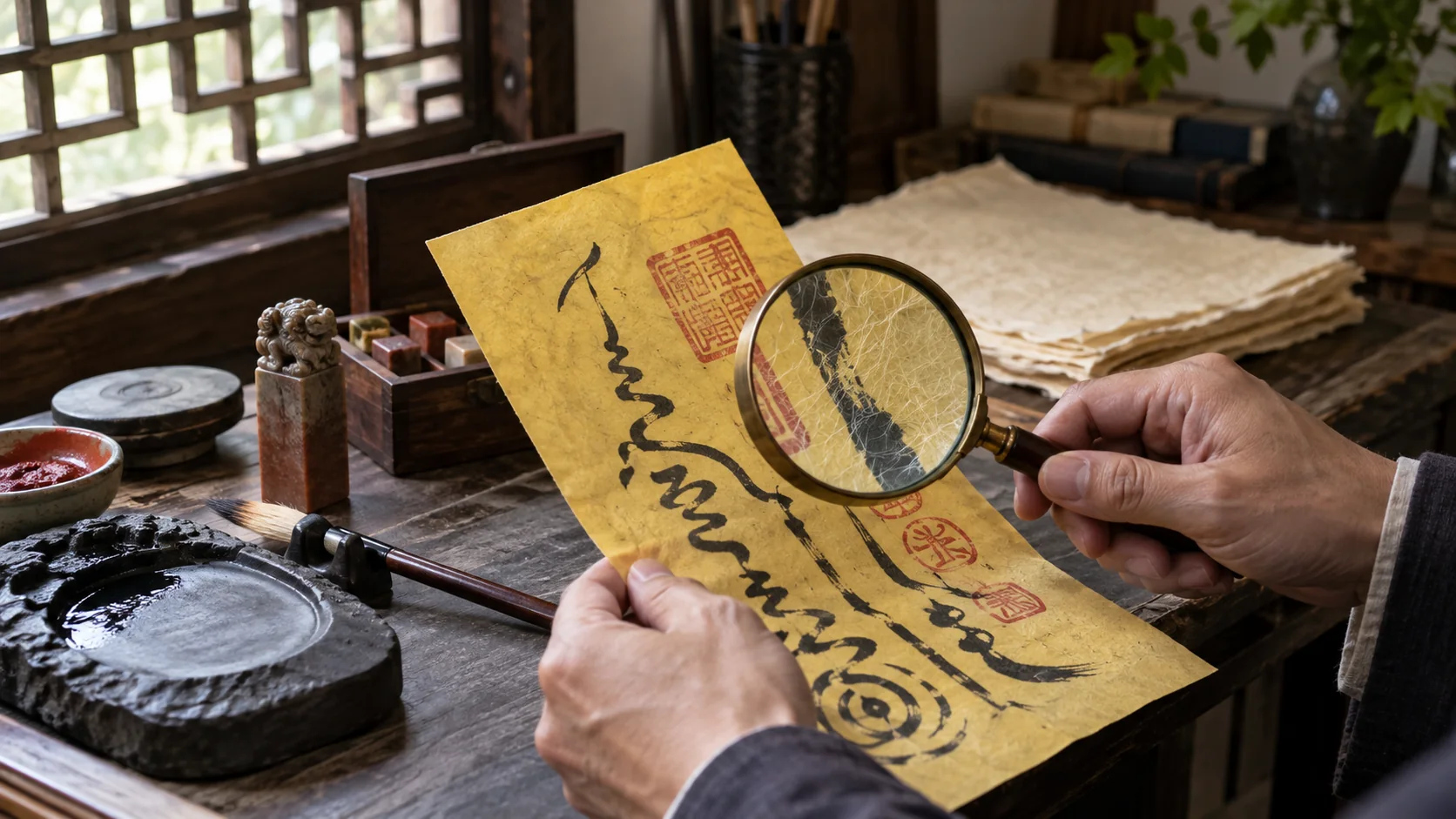
Shopping online makes Taoist cultural art accessible across the world, but a product photo cannot prove who made an item, what materials were used, or whether its religious claims are accurate. The word “authentic” is used loosely, so buyers need more useful questions than “Does it look traditional?”
This guide explains how to choose an authentic Taoist talisman online by checking provenance, transparency, care information, and seller behavior.
Decide What Authentic Means for Your Purchase
You may be looking for a ritual object issued by a practitioner, a hand-painted work made with traditional tools, a safe modern reproduction, or a culturally informed decorative piece. These are different products. A trustworthy listing should tell you which one it is.
Authenticity can refer to maker, lineage, method, material, place, or intended use. Ask the seller to state the claim precisely rather than relying on a badge or dramatic product title.
Look for an Identifiable Maker
A credible shop should provide a real name, biography, practice background, and a way to ask questions. If a listing names a temple, lineage, or title, look for a clear explanation of the relationship. Generic stock biographies copied across multiple sites deserve scrutiny.
A photograph of a person in robes is not enough. Consistent educational content, specific answers, and transparent business details provide stronger evidence.
Examine the Product Photography
Useful photographs show the actual front and back, paper texture, edges, seals, enclosure, and scale. Detail images should be consistent with the full item. Ask whether the photograph shows the exact piece you will receive or a representative example.
Handmade objects naturally vary. A seller who acknowledges small variations is often more credible than one who shows a single perfect image for unlimited “handwritten” stock.
Reverse-image search can help identify photographs reused from another maker, though matching images alone do not explain licensing or distribution arrangements. Ask before assuming.
Ask About Paper, Ink, and Pigment
Traditional appearance does not identify material composition. Request clear information about the paper, ink, seals, coatings, adhesives, and protective packaging. This matters especially when red pigment may be described as cinnabar.
Natural cinnabar contains mercury sulfide. Do not burn, ingest, grind, or place unknown pigment against skin. If a seller uses “cinnabar red” only as a color description, the listing should make that distinction clear.
Expect Specific Instructions
A seller offering a talisman for wear or home placement should explain how to handle, store, and retire it. Instructions may vary by purpose and tradition. Vague commands copied onto every listing suggest that the products are not being treated individually.
Good instructions also discuss practical limits: moisture, sunlight, damaged pigment, fire safety, children, and pets.
Be Careful With Guaranteed Results
No responsible listing can guarantee a promotion, marriage, cure, legal victory, investment return, or protection from every danger. Testimonials do not turn spiritual belief into measurable certainty.
Avoid countdown pressure, threats of bad luck, claims that only a costly upgrade will “activate” the object, or repeated demands for private financial and medical information. A cultural or faith item should not replace qualified professional help.
Check Pricing and Personalization Claims
Price alone does not prove or disprove authenticity. Handmade work, consultation time, archival materials, and international shipping can affect cost. Ask what the price includes.
If the item is described as personalized, the seller should explain what information is needed and how it is used. Share only what is necessary. Read the privacy policy before providing a birth date, address, or other personal details.
Review Shipping and Return Information
Paper needs flat, moisture-resistant packaging. The shop should state processing time, tracking method, damage procedure, and return limits before checkout. Personalized or ritually prepared work may have different return terms, but those terms should be visible and understandable.
Photograph the package when it arrives, especially if it is wet or bent. Contact the seller before opening a sealed ritual enclosure.
Verify the Website Itself
Look for HTTPS, working contact information, consistent names, secure payment methods, and clear policies. Search the domain name together with words such as “reviews,” “complaint,” or “scam,” then evaluate the sources rather than trusting a single post.
Check whether product descriptions distinguish history, belief, and factual material information. That distinction builds trust.
Questions Worth Sending the Seller
Before purchasing, ask for concise answers to these questions:
- Who made this item, and where?
- Is the photographed piece the one I will receive?
- Is it ritual, artistic, printed, or decorative?
- What paper and pigments are used?
- Is it safe to wear, frame, or handle directly?
- What instructions come with it?
- How should a damaged or expired item be handled?
Keep the response with your receipt and care instructions.
Trust Clarity Over Spectacle
An authentic purchase experience does not need exaggerated promises. It gives you enough information to understand the object's origin, role, materials, and limitations. It welcomes respectful questions and allows you time to decide.
When choosing a Taoist talisman online, provenance and transparent practice are stronger signals than ornate graphics, mystical language, or a high price.