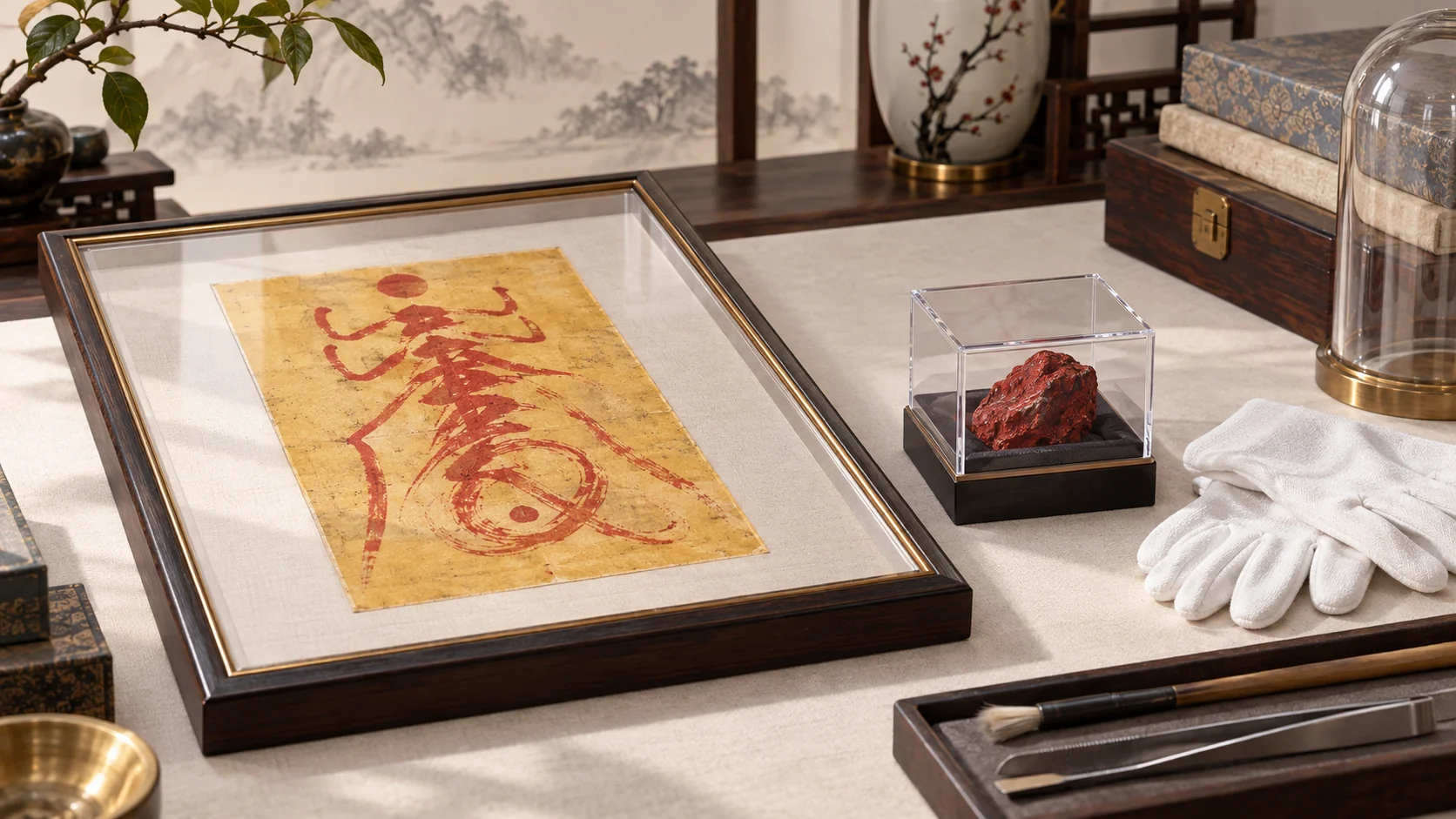
The brilliant red associated with many Taoist talismans has deep cultural significance. Historically, some red pigments were made with cinnabar, a mineral form of mercury sulfide. Modern talismans may instead use plant-based color, synthetic pigment, commercial ink, or a sealed preparation. Because appearance alone cannot reliably identify the material, sensible precautions are appropriate whenever the pigment is unknown.
This guide focuses on physical care and household safety. It does not replace instructions from the maker, a conservator, or local health authorities.
Why Cinnabar Requires Care
Cinnabar is valued for its vivid, durable color and long history in Chinese art and ritual. It also contains mercury. The risk depends on its form, condition, route of exposure, and how it is handled. An intact, sealed display object presents a different situation from loose powder, flaking pigment, smoke, or material that is swallowed.
The safest principle is simple: keep the pigment contained and avoid creating dust, fumes, or direct exposure. Do not assume a red talisman is harmless because it is traditional, and do not assume every red talisman contains cinnabar.
Ask the Maker or Seller
When possible, request clear material information:
- What pigment or ink was used?
- Is the surface sealed?
- Are there handling or storage instructions?
- Is the item intended only for display?
- Does it contain materials that require special disposal?
A responsible seller should distinguish historical symbolism from material composition. If the ingredients are unknown, handle the object conservatively.
Safe Handling at Home
Keep the talisman in a frame, protective sleeve, or closed display case. Place it where children and pets cannot reach it. Wash and dry your hands before and after handling an unsealed or older piece, especially if the surface appears powdery or damaged.
Never lick the paper, place it in the mouth, use it in food or drink, or apply pigment to the skin. Do not sand, scrape, crush, or cut through painted areas. Avoid vacuuming loose pigment with an ordinary household vacuum, which can spread fine particles.
If the item is intact, routine care usually means leaving the surface alone. Dust the outside of the frame or case rather than brushing the talisman itself.
Heat, Burning, and Smoke
Do not burn a talisman containing cinnabar or an unknown pigment. Heating mercury-containing material can create hazardous exposure, and smoke from paper, coatings, adhesives, and other pigments may also be harmful.
Some religious traditions include burning specially prepared paper in a controlled ritual context. That custom does not make every object suitable for burning. Follow the exact instructions of a qualified practitioner and all local fire and environmental rules. When the composition is unknown, choose a non-burning method of respectful storage or retirement.
Do not place the object directly above candles, incense burners, radiators, or cooking surfaces. Heat can damage the paper and increase fire risk even when the pigment is modern.
What to Do if Pigment Is Flaking
If you notice red dust, flakes, or a damaged surface, stop handling the item. Keep people and pets away from the area. Do not blow on the dust or sweep it in a way that makes it airborne.
Place the item carefully into a sealable container without touching the affected surface, if this can be done safely. Contact a professional paper conservator or your local household hazardous-material authority for advice. For a significant spill or possible exposure, follow guidance from local poison control or public health services.
If pigment contacts skin, avoid spreading it, wash with soap and water, and seek professional advice when exposure is substantial or symptoms occur. If anyone may have swallowed material, contact local emergency or poison-control services promptly.
Storage and Display
Choose a dry, stable location away from direct sun. Use acid-free backing and a frame that prevents contact with the front glazing. Clearly label the storage enclosure if the object is known or suspected to contain cinnabar so future handlers understand the precaution.
Do not store it with food, medicine, cosmetics, children’s items, or pet supplies. Keep documentation about the pigment with the object. Good records are part of safe stewardship.
Buying New Talismans
If material safety is a concern, ask for talismans made with clearly identified modern, non-mercury pigment. Request written confirmation rather than relying on color or marketing terms. “Cinnabar red” may describe a shade, while “natural cinnabar” may describe a material; the distinction matters.
For wearable items, confirm that the colored surface is sealed and intended for wear. Stop using the item if the coating cracks or the pigment becomes exposed.
Respecting Tradition Through Responsible Care
Cultural respect and material safety support one another. Preserving an object carefully protects its artistry and meaning. Accurate labeling protects family members, conservators, and future owners. Choosing not to burn unknown material protects the wider environment.
The red color of Taoist talismans carries a rich symbolic history. Responsible handling allows that history to be appreciated without turning tradition into an avoidable household risk.